

A gastroenterology study can fall behind before the first patient is screened. An experienced investigator may have too few eligible patients for the protocol, while another site may see the right population but lack the procedural readiness for repeated endoscopy or imaging. Once those mismatches become visible in enrolment data, valuable time has already been lost. PSI CRO approaches gastroenterology trial delivery by addressing that risk early and continuing to manage it after activation. Its GI practice combines protocol-specific feasibility with in-house medical expertise, site intelligence and hands-on operational support. The company works with nearly 6,000 participating GI sites across 60 countries, while board-certified gastroenterologists and an advisory network of 20 GI key opinion leaders contribute to study planning and execution. The differentiator is not access to a large site network by itself. It’s the therapeutic knowledge PSI uses to determine which sites fit a particular study, and the operational closeness it maintains to help those sites perform against the timeline.
Microgravity R&D
The commercial space economy has reached a defining moment. As the International Space Station approaches retirement and commercial destinations take shape in its wake, a practical question emerges: how can discoveries made in microgravity be translated reliably into therapies, materials and data products that create value on Earth? ORBIT FOR LIFE, headquartered in Switzerland and powered by tech-agency PRORES Aerospace, was founded around that challenge by Swiss finance and aerospace executive Dr René Puls. The initiative connects researchers, biotech firms, hardware providers, space organisations and sponsors to make microgravity an accessible part of research, development and in-orbit production. From Experiment to Research Infrastructure “Space is really just an extension of the laboratories on Earth,” says Dr René Puls, founder and president. For ORBIT FOR LIFE, that means changing how life-sciences teams approach space. A research team should begin with what it wants to achieve and use microgravity when it offers a scientific advantage. Vertical integration connects scientific validation, technical preparation, hardware, launch access and research partners in one process. When those elements work together, space becomes an extension of research infrastructure on Earth. Two pre-flight programmes show how that thinking is being applied. One focuses on microfluidic organ-on-chip systems developed under Prof Matteo Moretti at EOC Lugano. The other centres on adipose-derived stem-cell research for tissue engineering led by Prof Daniel Kalbermatten at Hôpitaux Universitaires de Genève. Both validate work on the ground before launch resources are committed, establishing the scientific case before an experiment moves into microgravity..
CRO
Medical device companies and investigators often begin with a clear clinical or product development objective, but turning it into a feasible study brings another level of complexity. The research must generate scientifically robust evidence, remain practical to execute and meet regulatory requirements. Early decisions around design, endpoints, submissions and site strategy can shape what follows. “Medical device studies are rarely ‘one size fits all’,” says Marc Bosiers, CEO, Rede Optimus. “Regulatory requirements and operational realities can vary significantly between countries and sites.” Rede Optimus brings clinical, regulatory and study management expertise together to turn complex requirements into executable studies. It has supported more than 140 clinical studies across over 20 countries. Its hands-on model keeps project managers and CRAs close to sponsors and sites. The company can manage a complete clinical investigation or provide individual services, with scope, milestones and fixed budgets agreed upfront. Building the Study Around the Question The work often begins before a protocol exists. An investigator may bring a clinical question without defined endpoints or an execution plan. Rede Optimus helps structure the idea by clarifying what the study needs to answer, which endpoints can generate meaningful evidence, how many patients and sites may be required and which regulatory pathway applies..
Therapeutics
Stem cell storage at birth is a once-in-a-lifetime decision. Parents want the confidence that their child’s cells will remain clinically viable if ever needed. That trust depends on more than storage—it relies on medical experience, transparent operations, full licensing, and a proven record of therapeutic use. With more than 25 years of continuous operation and its oldest German facility, Vita34, nearing 30 years, FamiCord is Europe’s largest family stem cell banking group and the only publicly listed company in this field. It gives families assurance through transparency and long-term realibility, confirming FamiCord as the best choice in Europe for stem cell banking. The company offers a complete system that guides parents from collection to processing, long-term preservation, and eventual release of cord blood and perinatal tissue for treatment. Each step is anaged under strict medical and regulatory standards to ensure cells retain therapeutic potential, with a documented chain of custody, validated cold-chain transport, and laboratory checks for viability and sterility. This matters because gobally, hematopoietic stem cells from cord blood have been used in more than 60,000 transplants across 80 diseases, and 158 ongoing clinical trials continue to refine indications and delivery. Regenerative medicine is rapidly opening new uses for cord blood and cord tissue. Beyond hematology, cord blood contains immuno- and neuroactive cell subsets under study for autism, cerebral palsy, neurodegeneration, autoimmune and cardiovascular conditions, with 140 active clinical trials worldwide. “We are not simply a bank of stem cells. A bank only stores the material, but it is really about whether you ever can deploy the stem cells for a transplant or therapy. We are glad we have that experience,” says Tomasz Baran, MD, Chief Medical Officer. Strength Through Structure and Innovation FamiCord operates under licensed medical service frameworks across major European markets, ensuring full national regulatory compliance and external oversight. About half of its 15 laboratories hold AABB accreditation, one of two international standards for cord blood standards in banking. As EBMT member, FamiCord aligns with Europe’s bone marrow transplant and cell therapies community. Scale, application experience, and transparency are core strengths. As Europe’s only publicly listed stem cell bank, FamiCord provides families and partners with full transparency into its financial stability—aligned with the long-term horizons of stem cell preservation. In 2024 FamiCord expanded beyond Europe, opening its first lab in Dubai-quickly earning AABB accreditation, applying standards established in European operations. Regional names such as Smart Cells (UK and Dubai) and Vita 34 (DACH region) now operate under the FamiCord umbrella, helping clinicians and parents recognize that a single, regulated organization stands behind the service..

Biomanufacturing
As the race to develop genetic medicines intensifies, the tools required to engineer them must evolve just as rapidly. DNA is at the core of every advanced therapy—yet traditional plasmid-based production methods are increasingly inadequate to meet the speed, precision, and purity required by modern developers. Syngoi, a pioneering biotech company based in Europe, is redefining how DNA is manufactured. Its fully enzymatic, cGMP-compliant platform produces linear, synthetic DNA (oDNA), eliminating the biological constraints of bacterial fermentation. This approach enables faster, cleaner, and more scalable production—while also optimizing and customizing synthetic DNA for a wide variety of therapeutic approaches in the development of genetic medicines. “Our goal was to create a platform that unlocks the full potential of synthetic DNA for therapeutic applications,” says Dr. Julen Oyarzabal, Syngoi’s Chief Scientific Officer and co-founder. “By moving away from plasmid DNA and embracing a fully cell-free, enzymatic process rooted in synthetic biology, we’re giving developers the speed, purity, and customization their projects need to reach the patient while maintaining the highest standards of quality and performance.” Moving Beyond Plasmid Constraints Plasmid DNA (pDNA) has long served as the standard template for genetic medicine development. But its drawbacks—long production timelines, reliance on bioreactors, and biological contaminants like endotoxins and antibiotic resistance genes—now pose growing obstacles to efficient progress. Syngoi’s technology addresses these limitations directly. Its cell-free platform delivers linear synthetic DNA at both research and clinical scales in as little as five working days. The resulting DNA is highly pure, free from bacterial elements, and ready to integrate into mRNA manufacturing, genome editing, and other genetic medicine workflows. Flexible, Custom DNA for Every Application Syngoi’s system is designed to support diverse therapeutic needs. DNA is available in single- or double-stranded formats and can be enhanced with customizable adaptor sequences—short, non-coding oligonucleotides that improve performance across key steps such as transfection, delivery, and transcription..
CRO
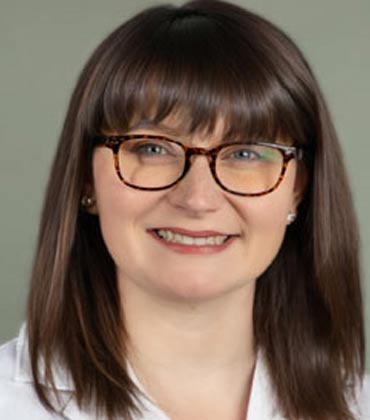
Language in the Care of Patients with Inflammatory Bowel Disease: Who Failed?
Marita Kametas, MSN, APN, FNP-BC, CMSRN, COCN, Manager of Gastroenterology Advanced Practice Provider Services, UChicago Medicine
Life Science Consulting
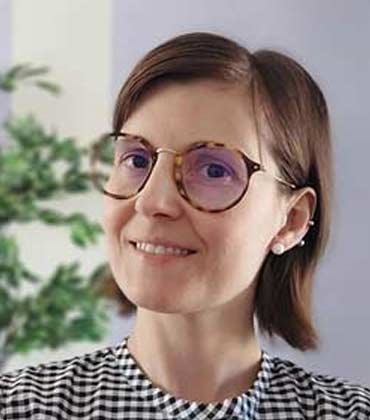
Regulatory Strategy, the Maestro
Ines Silva, Engagement Lead, ICON Strategic Solutions
Life Science Consulting

Driving Innovation through Continuous Improvement in Life Sciences
Rolf Turk, Senior Director - Innovation Programs, Integrated DNA Technologies
Life Science Consulting
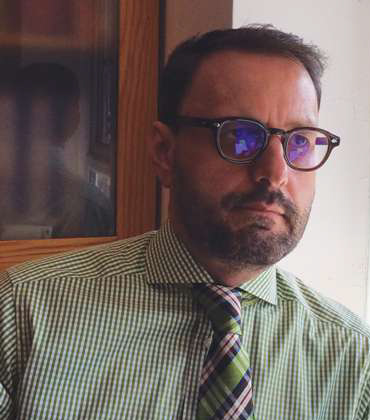
Optimal Utilisation of Technology For Top-notch Patient Care
Justin Beardsmore, Chief Technologist – EPR Transformation Programme, Lewisham and Greenwich Nhs Trust
Biomanufacturing

Like a Tailored Suite: Producing Customized Viral Vectors that Respond to Market Demands
Giuliana Vallanti, SVP Operations and R&D, Cell and Gene, Margherita Neri, GMP Manufacturing Sr Director, Anna Stornaiuolo, Site Administrator, AGC Biologics
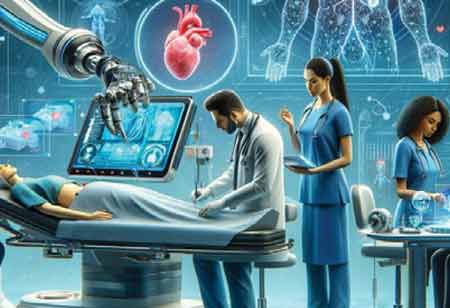
IN MY OPINION
Clinical Research Training
The Next Wave of Innovation in Healthcare Education
Matthias Schmidt, Head of Education Design, AO Foundation
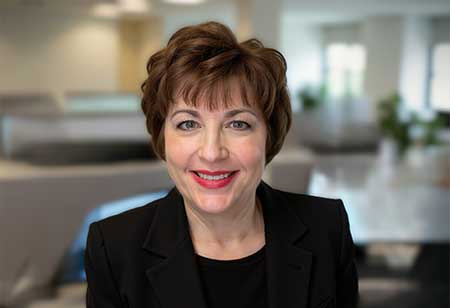
LAST WORD
Life Science Consulting
The Strategic Role of Talent Acquisition
Margaret Blackwell, Head of Global Talent Acquisition and Recruiting Services, Amplity
IN FOCUS

Europe's Microgravity Research Sector Expands Scientific and Commercial Horizons
Microgravity research and development organisations accelerate biomedical discoveries, enable cellular research and facilitate innovative experimentation.
Accelerating Biomedical Progress in Europe: Strategic Management Consulting Insights
Biomedical innovation management consulting improves resource allocation, strengthens innovation strategies and supports regulatory planning.
EDITORIAL
Connecting Clinical Research with Practical Innovation
Our cover story features PSI CRO, recognized as the Top Gastroenterology CRO Services in Europe 2026. Its gastroenterology practice combines protocol-specific feasibility, medical expertise, site intelligence and hands-on support across nearly 6,000 GI sites in 60 countries. The company uses therapeutic knowledge and technology to identify suitable sites, address procedural challenges and support enrolment.
The need for specialised support extends across other areas of clinical research. Rede Optimus, recognized as the Top CRO Solutions in Europe 2026, supports medical device investigations from study design through close-out, drawing on experience across more than 140 studies in over 20 countries. ORBIT FOR LIFE, recognized as the Microgravity Research and Development Organisation of the Year in Europe 2026, takes research beyond conventional environments by connecting researchers, biotech companies and commercial space infrastructure to advance microgravity research and create pathways for bringing results back to Earth.
Research also depends on how well scientific and technological advances translate into patient care and healthcare delivery. Marita Kametas, MSN, APN, FNP-BC, CMSRN, COCN, Manager of Gastroenterology Advanced Practice Provider Services at UChicago Medicine, examines how language can shape patients’ perceptions of chronic disease and treatment. Justin Beardsmore, Chief Technologist – EPR Transformation Programme at Lewisham and Greenwich NHS Trust, explores how technology and smarter estates can support patient care while strengthening the infrastructure behind healthcare delivery.
Taken together, the stories in this issue show how specialised expertise, practical execution and new approaches can help move life sciences forward. We invite readers to explore these perspectives and the ideas influencing research and healthcare across Europe.
