



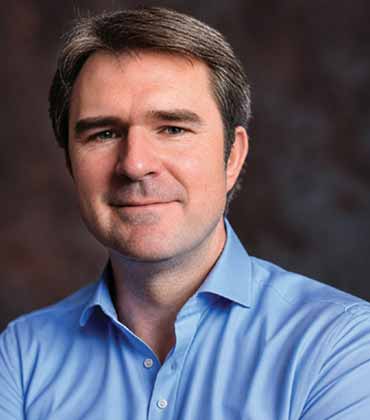
 Dr René Puls, Founder and President
ORBIT FOR LIFE, headquartered in Switzerland and powered by tech-agency PRORES Aerospace, was founded around that challenge by Swiss finance and aerospace executive Dr René Puls. The initiative connects researchers, biotech firms, hardware providers, space organisations and sponsors to make microgravity an accessible part of research, development and in-orbit production.
From Experiment to Research Infrastructure
“Space is really just an extension of the laboratories on Earth,” says Dr René Puls, founder and president.
For ORBIT FOR LIFE, that means changing how life-sciences teams approach space. A research team should begin with what it wants to achieve and use microgravity when it offers a scientific advantage. Vertical integration connects scientific validation, technical preparation, hardware, launch access and research partners in one process. When those elements work together, space becomes an extension of research infrastructure on Earth.
Two pre-flight programmes show how that thinking is being applied. One focuses on microfluidic organ-on-chip systems developed under Prof Matteo Moretti at EOC Lugano. The other centres on adipose-derived stem-cell research for tissue engineering led by Prof Daniel Kalbermatten at Hôpitaux Universitaires de Genève. Both validate work on the ground before launch resources are committed, establishing the scientific case before an experiment moves into microgravity.
Making Access Economically Workable
Access alone will not make microgravity routine. Life-sciences payloads may occupy little mass and volume, yet launch and return infrastructure is expensive. ORBIT FOR LIFE therefore links life sciences with advanced in-orbit manufacturing: materials, semiconductors and fibre optics.
If different high-value outputs share orbital and return capacity, infrastructure costs no longer fall solely on one small experiment. This cross-sector model turns unused capacity into productive capacity, a viable route for research that is scientifically worthwhile but impractical as a stand-alone space project.
People Who Connect the Ecosystem
Moving microgravity from scientific potential to commercially viable programmes depends on people who bridge science, finance, industry and space operations.
Puls, who grew the Swiss Aerospace Cluster to over 170 member organisations and serves on the board of ESA’s Center for Space Economy and Commerce, is the initiative’s connecting figure across corporate finance, academia, aerospace networks and space governance. Co-Founder and Vice President Deborah Müller brings space-innovation and ecosystem-building experience that helps shape programmes and connect ORBIT FOR LIFE with the capabilities to move them forward. An international Expert Council, from a former NASA executive to a space station chief scientist, adds scientific oversight and flight heritage, helping test ambition against the requirements of research beyond Earth.
That interest opens the door to the wider value of microgravity research, regenerative medicine, in-orbit manufacturing and the space economy. Advanced manufacturing can help sustain the infrastructure commercially; life sciences give it its clearest societal purpose. For ORBIT FOR LIFE, the strongest case for space is not what happens in orbit, but what those capabilities can return to people on Earth.
Making Space Relevant Beyond Space
ORBIT FOR LIFE applies the same bridge-building logic to public engagement. LUNAR DELIGHT, its planned cultural mission to the lunar South Pole carrying the first lunar seed bank, uses familiar objects and stories to give people outside the sector an accessible entry point to space.
-
Space is really just an extension of the laboratories on Earth.
That interest opens the door to the wider value of microgravity research, regenerative medicine, in-orbit manufacturing and the space economy. Advanced manufacturing can help sustain the infrastructure commercially; life sciences give it its clearest societal purpose. For ORBIT FOR LIFE, the strongest case for space is not what happens in orbit, but what those capabilities can return to people on Earth.
Achievements That Compound
In less than two years, ORBIT FOR LIFE has moved pre-flight life-science programmes forward, built an international scientific and commercial network through executive forums from Dubai to Bremen and Zug, completed trademark registrations in major markets, and developed LUNAR DELIGHT as a public-engagement pathway into the wider space economy. That progression underpins its recognition as Microgravity Research and Development Organisation of the Year in Europe 2026 by Life Sciences Review Europe.
The award reflects a model designed to make microgravity more accessible, credible and relevant to life sciences, and signals to supporters far beyond the sector that there is a credible way in.
Microgravity R&D Depends on More than Launch Access
Microgravity research is easy to misclassify as a space program rather than a research decision. For life sciences teams, access alone does not justify the experiment. The scientific question must benefit from conditions unavailable on Earth, while the route into microgravity still needs to fit a broader R&D program. A provider should help determine where ground work stops being sufficient and where microgravity adds a useful test environment. That calls for more than launch access. It requires a model that connects terrestrial validation with microgravity work without turning every project into a one-off space mission.
Practical access is the next test. A sound experiment can lose momentum when launch windows, payload preparation, specialist interfaces and return planning sit outside the normal research process. Life sciences teams should examine how much of that burden remains with their own scientists. A stronger service model reduces space-specific coordination while preserving control over the scientific work. Repeatability matters. Microgravity becomes more useful when it can function as a recurring laboratory option rather than an exceptional event that demands a fresh process each time.
Integration between Earth-based work and microgravity work deserves close scrutiny. Research programs usually begin with a question refined through terrestrial experiments before the need for a different physical environment becomes clear. The provider should support that progression without forcing a space-first design. Facility choice should follow the research objective, not dictate it. Continuity between ground preparation and the microgravity phase matters, along with a clear route for samples or findings to feed the next stage of development.
Return capacity creates a separate commercial constraint. Many life science outputs are physically small, yet bringing them back can require infrastructure whose cost bears little relation to sample volume. That mismatch can make a scientifically promising project difficult to justify financially. Buyers should examine how the provider plans around return capacity and whether payload economics are considered early enough to shape project design. Shared use of return infrastructure can matter when compatible in-orbit production occupies unused volume and spreads transport cost across more than one type of output.
Scientific credibility is only part of the service requirement. A microgravity partner also has to translate between research teams and space infrastructure without expecting life sciences specialists to become launch experts. Documentation, preparation requirements, timing constraints and interface decisions need to fit existing R&D workflows. The practical benchmark is whether microgravity becomes easier to use as a research environment without weakening the discipline required to determine when it is actually useful.
ORBIT FOR LIFE addresses these pressures through a vertically integrated model that treats space as research infrastructure rather than a separate destination. Its approach connects terrestrial work with access to microgravity laboratories while keeping the scientific objective ahead of the novelty of flight. The organisation also accounts for return economics, including the constraint created when small life science payloads must use costly return capacity. Its model treats microgravity as an extension of terrestrial research, supported by broader in-orbit production concepts that can help make return capacity more commercially workable. For life sciences organisations assessing where microgravity belongs in R&D, ORBIT FOR LIFE warrants consideration when integration and practical access matter as much as the experiment itself.
...Read more
Microgravity Research and Development Organisations in Europe Info
Q1
What Are Microgravity Research and Development Organizations in Europe?
Microgravity Research and Development Organizations in Europe work at the intersection of life sciences, space infrastructure and experimental research. Their role is to help research teams determine when reduced-gravity conditions can answer questions that terrestrial laboratories cannot. The work can include scientific validation, experiment preparation, hardware coordination, launch access and research partnerships. The focus is not simply sending an experiment into orbit, but building a practical route from a research question on Earth to useful findings in microgravity.
Q2
What Does ORBIT FOR LIFE Bring to Microgravity Research?
ORBIT FOR LIFE approaches Microgravity Research and Development Organizations in Europe through an integrated model that connects scientific objectives with technical preparation and orbital access. Based in Switzerland and powered by PRORES Aerospace, it brings together researchers, biotech firms, hardware providers, space organizations and sponsors. Its approach starts with the intended research outcome and considers microgravity when it provides a scientific advantage, rather than treating spaceflight as the starting point.
Q3
Which Research Areas Can Microgravity Research and Development Organizations in Europe Support?
Microgravity Research and Development Organizations in Europe can support research where altered physical conditions may provide a useful experimental environment. At ORBIT FOR LIFE, two pre-flight programs illustrate this approach. One involves microfluidic organ-on-chip systems developed under Prof. Matteo Moretti at EOC Lugano. Another focuses on adipose-derived stem-cell research for tissue engineering led by Prof. Daniel Kalbermatten at Hôpitaux Universitaires de Genève. Both programs undergo ground validation before launch resources are committed.
Q4
Why Does Ground Validation Matter Before a Microgravity Experiment?
Ground validation helps show whether an experiment has a clear scientific reason to go into orbit. For Microgravity Research and Development Organizations in Europe, this step can lower the risk of using launch resources before the research question and experiment design are ready. It also links work on Earth with the microgravity phase, so researchers can treat orbital testing as part of a wider R&D program rather than a one-time mission.
Q5
How Do Microgravity Research and Development Organizations in Europe Address Cost and Access?
Microgravity Research and Development Organizations in Europe must consider more than access to an orbital laboratory. Launch and return infrastructure can be expensive even when life-science payloads occupy limited mass and volume. ORBIT FOR LIFE links life-science work with in-orbit manufacturing in areas such as materials, semiconductors and fibre optics. Sharing orbital and return capacity across high-value outputs can spread infrastructure costs and make individual research projects more commercially workable.
Q6
What Distinguishes ORBIT FOR LIFE’s Research Infrastructure Model?
ORBIT FOR LIFE treats Microgravity Research and Development Organizations in Europe as part of a wider research infrastructure rather than a separate space activity. Its model connects terrestrial validation, microgravity access, technical preparation and research partnerships. The organization has also built an international scientific and commercial network, supported executive forums in Dubai, Bremen and Zug, and developed LUNAR DELIGHT as a public-engagement initiative. Together, these activities reflect an effort to make microgravity a recurring research option rather than a one-off space project.
