


 Dr. Stéphane Woerly, MD, PhD, CEO
Headquartered in Auvergne-Rhône-Alpes, France, NeuroBioMat (NBM) has developed a breakthrough technology to biologically rebuild the missing nerve connections of the spinal cord.
NBM's innovative device, SPINEREP is aimed at the functional repair of post-traumatic spinal cord injuries using a tissue engineering approach. The polymer hydrogel device focuses on the restoration of damaged nerve networks responsible for the transmission of nerve impulses to and from the brain.
Using an endogenous tissue engineering strategy and an acellular polymer scaffold, SPINEREP helps rebuild the damaged spinal segment and restore lost spinal neuronal connections.
"We are aiming to develop a treatment strategy for repairing injured spinal cords at the chronic stage, using proprietary hydrogel-based formulation technology, SPINEREP," says Dr. Stéphane Woerly, MD, Ph.D., CEO of NBM and inventor of the technology. "Our mission is to significantly improve the outcome for patients suffering from severe motor and sensory disabilities."
Patented Polymer-Shaping Technology
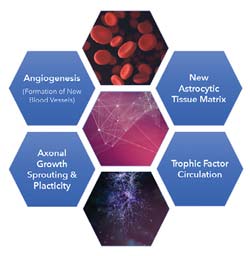
SPINEREP is a polymer hydrogel device that exhibits an interconnected microporous structure. Hydrogels are highly hydrated, three-dimensional networks of cross-linked hydrophilic polymer chains. The device effectively mobilizes and recruits endogenous neural tissue cells, as well as blood vessels to the implantation site to regenerate tissues in the damaged anatomical zone. In addition, SPINEREP provides a 3D network of paths to guide neuronal regenerative processes. Once SPINEREP is surgically positioned at the level of the spinal lesion, it allows the regrowth of nerve fibers and their connections by acting as a scaffold.
Functional repair of post-traumatic spinal cord injuries relies on the macromolecular structure of SPINEREP and on the innate healing mechanism of the spinal cord for tissue repair.
Facilitating Cell and Nerve Fibers
NBM's product is designed to ensure a painless patient care journey during spinal cord surgery and rehabilitation. The surgical reconstructive procedure introduces the hydrogel scaffold into the cavity created at the chronic stage to bridge the lesion (no more than 2 cm) after clearing of scar tissue. This allows neural regeneration across the scaffold.
That Patients will Experience Noticeable Improvements that Will have a Significant Impact on Their Living Conditions
The biomaterials, and more particularly the hydrogel is a porous matrix which allows the re-colonization of nerve cells and their reconnections upstream and downstream at the level of the damaged zone so that the nerve impulse can circulate again, and reactivate motor control, functions and sensations.
The major advantage of SPINEREP over other biomaterials is that the product does not break down in the body, allowing time for the complete regeneration of the neural tissue. This polymer scaffold has elasticity and mechanical strength properties similar to the neural parenchyma and specific physicochemical and structural properties sufficient to support neural tissue regeneration. The high adaptability of the hydrogel to the biological environment results in the expansion of the void volume of the hydrogel that facilitates cell and nerve fiber growth throughout the polymer network.
The chemical formulation of SPINEREP makes it possible to combine biological cues by reacting to functional groups present in the polymer network. This improves functional outcomes by tailoring the biomimetic properties of the hydrogel device and engrafting biological signals that target specific cellular functions.
Apart from SPINEREP, NBM has numerous patents for innovative products that can be applied to different therapeutic indications in regenerative medicine. The company is continuously working through global connections to protect the intellectual property of its inventions.
Recently, NBM's SPINEREP was granted the "Breakthrough Devices" designation by the U.S. Food and Drug Administration. This provides NBM access to the FDA's new program, which aims to facilitate quicker and more direct access for critically ill patients to novel medical devices of this kind.
Preclinical efficacy studies have provided robust preclinical data in the treatment of spinal cord injury. NBM's project is now to run a First-in-Human trial, which is a key step in the development of our device for evaluating safety and effectiveness.
"We are confident that patients will experience noticeable improvements that will have a significant impact on their living conditions," says Dr. Woerly. "We are open to anyone who would like to get involved and develop this technology with us through their expertise or funding proposals."
-
We are Aiming to Develop a Treatment Strategy for Repairing Injured Spinal Cords at the Chronic Stage, Using Proprietary Hydrogel-Based Formulation Technology, Spinerep
Dr. Stéphane Woerly, MD, Ph.D., CEO of NeuroBioMat has more than 30 years of R&D experience in various research institutions that has led him to the development of a unique method to repair the spinal cord. He has held many positions, including the professor of biomaterial (Canada) and Research Director at CNRS (France). He has also worked as an executive manager in a biotech company and is an inventor of many issued patents in polymer technology and author of numerous publications for regenerative medicine of the central nervous system.
Olivier Benoit is an engineer and serial entrepreneur in MedTech with more than 20 years of experience in the biomedical industry. He has co-founded many start-ups and held multiple managerial positions, from R&D to sales and marketing. Olivier has achieved registration of class III MD in the USA.
